Routes, Not Paths
The Fight for E-Transport

We should be as safe traveling at 15 mph as we are at 60. It’s the least we should expect in the 21st century.
We’re not. The Carheadedness of Modern America, enforced through transportation policy, means every E-Transport trip means taking your life into your hands.
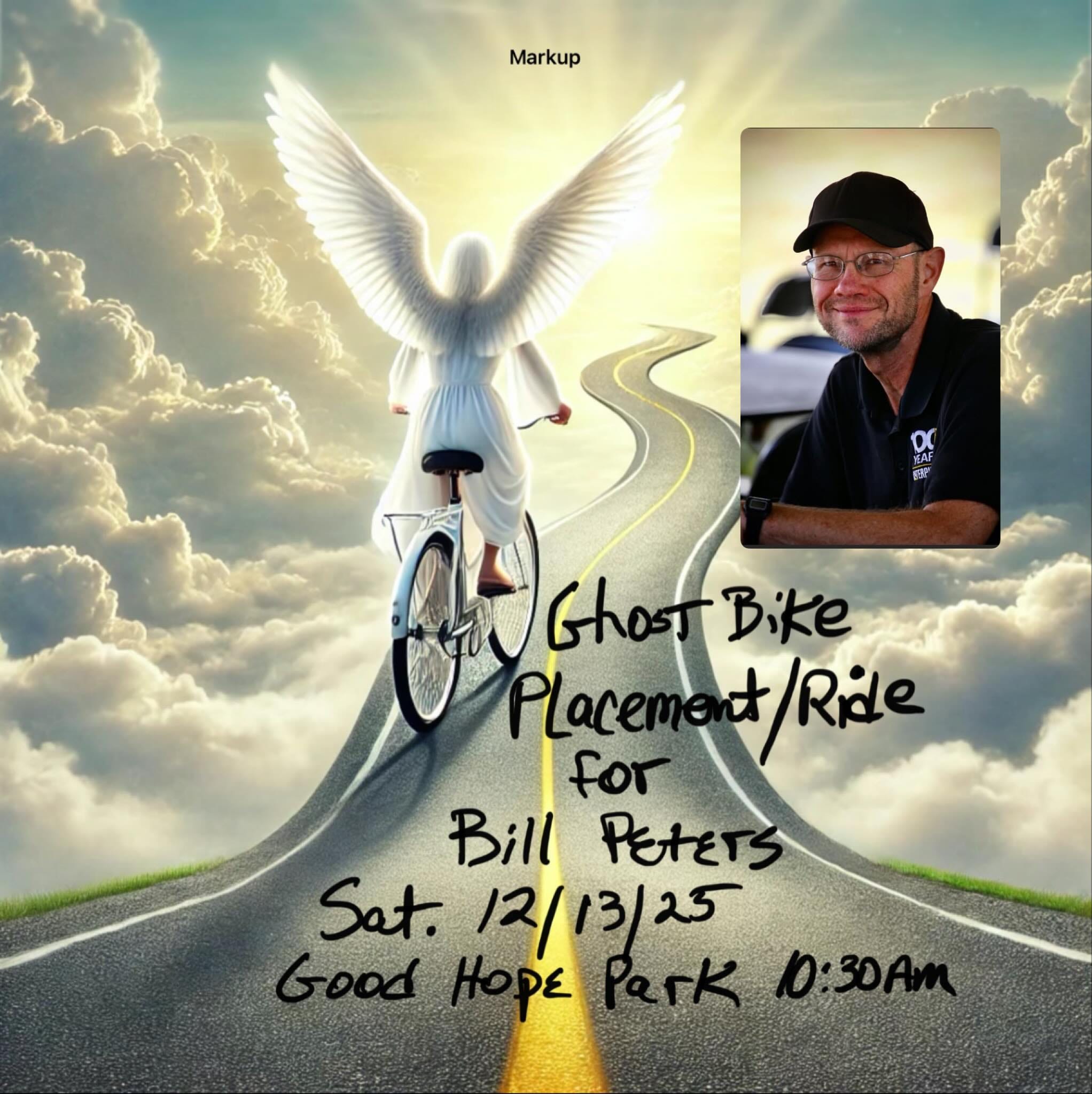
Here in the Southeast, David Mathews of BikeFriendly seems to be constantly placing “ghost bikes” near the sites where cyclists have been run over by cars. The most recent placement is for Bill Peters at Good Hope Park in Georgia.
Over 40,000 Americans are killed in car accidents each year, and while the toll from vehicle-to-vehicle collisions has gone down, it’s more than made up by a rising toll among cyclists and pedestrians.
Cities like Atlanta are responding to the E-Transport Revolution by creating “bike trails,” wide sidewalks along major roads, sometimes cut through woods and along creek bottoms, that are supposed to create bike safety.
They don’t. This is because they’re just trails. What bikers, e-bikers, and the rest of the E-Transport Revolutionaries need, and deserve, are routes.
What’s the Difference?
Trails end when they end. Routes end when we end. Routes offer safety between major points in a city. The goal is for safe access to all of it.
Every cyclist or e-bike rider is on the hunt for routes. To travel five miles, from my house to the center of Atlanta, I u ride about 6 miles, sometimes more. I’m looking for roads with no more than 2 lanes, on which cars legally travel at just 25, but where they usually go much slower, restricted not by signs but by other cars turning those 2 lanes into 1.
I also don’t ride at night. Hard to do in the winter, but there you are.
Some of my routes go along bike “trails,” like the Trolley Line Trail on Atlanta’s east side. But a lot of bike infrastructure remains closed, like the lovely bike intersection at Moreland and DeKalb Ave., inaccessible from the east because bikes must fight cars going 35 mph for a single lane. Sometimes I use bike paths, but sometimes I ride the roads next to them, as the path is sent down-and-up for every curb cut, and cars use them as driveways. Sometimes the “bike path” is just a line of paint on the side of the road. Then there are times I don’t even get paint. Whatever it is, I take it, because I’m going from a specific Point A to another Point B.
Car drivers don’t think this way. All the city’s infrastructure is open to them. Most drivers don’t look at what they’re passing. Their minds are entirely on other cars. Their concern is either that someone might get in front of them, or they’re wondering how they might get in front of someone else.
The Fight for Routes
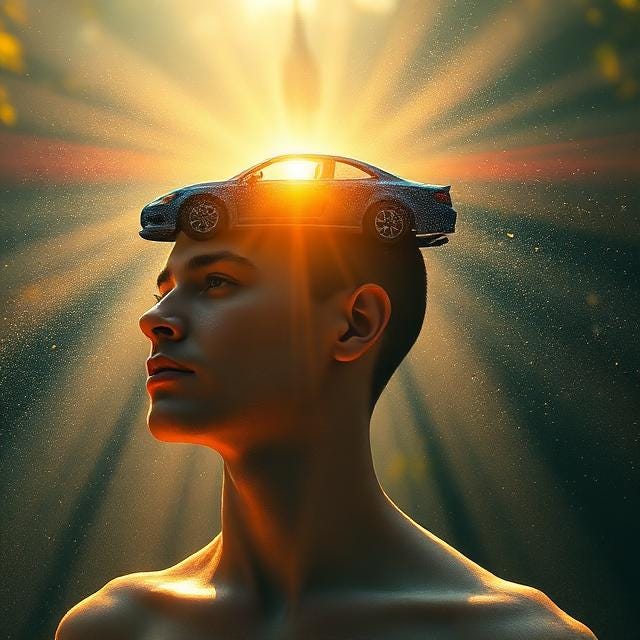
We all drive this way. I drive this way. But note one of the big differences between E-Transport and Car Transport. On my e-bike I see the places I’m passing. I’m part of the environment. In my car, I only see other cars. I’m isolated. (Image from DeepAI.)
In Atlanta, the PATH Foundation sees bikes as recreation, not transportation. They’re happy with building trails. The PROPEL group is fighting an uphill battle against bureaucratic intransigence and CarHeads.
It’s easy to find the CarHeads whenever bike infrastructure is discussed. Just read the comments. You’re slowing me down, they complain. Well, yes. Why do you think that is? I’m not to blame, the CarHeads lament. Maybe not anecdotally, but statistically you are to blame.
Adding to the confusion are owners of electric motorcycles, sold as “Class 3 e-bikes,” who want their vehicles treated as e-bikes. They demand access to trails and paths, in competition with real e-bikes, although they’re fast enough to use roads. They have also created a Bikelash. Cities and wilderness groups in some places are banning all e-bikes, even my 20 mph Class 2, because of the damage done by e-motos.
What this means is that, in 2026 and beyond, E-Transport advocates have our work cut out for us. The good news is that e-bikes, cargo bikes, e-trikes and other forms of slow E-Transport continue to sell, which means there are more of us.
It will be a struggle, there will be casualties and setbacks, but E-Transport is going to win.